
WELCOME BONUS 300%
UP TO €2000 + 100
FREE SPINS
UP TO €2000 + 100
FREE SPINS
Home → Games
All casino games at Coolcat Casino
When Does Splitting Aces and Eights Make Sense?
In Blackjack Liberal Vegas Strip, a house edge of 0.28% is the figure to beat, and it rests on a rule set of S17 plus DAS plus resplit plus late surrender, with a standard deviation of 1.15. The most player-friendly blackjack variant on the table carries an RTP of 99.72%, which means 100 € of stakes cost about 0.28 € on average. Splitting aces and eights belongs to that value-oriented rule set, because it turns one weak starting hand into two, and the resplit rule keeps the option open.
Compare that with Blackjack Insurance, where the house edge is 7.47% on a side bet of up to 50% of the main bet when the dealer shows an ace; basic strategy always declines it, except for card counters at a true count of at least +3. A single deck drops the insurance edge to roughly 5.88%. The gap between 0.28% on the main game and 7.47% on the insurance side bet is the reason splitting and doubling decisions, not side bets, carry the value for a player.
A single deck with classic rules and a 3:2 payout reaches an RTP of 99.85% and a house edge of 0.15%, which is about 0.48 percentage points lower than eight decks. Late surrender takes another 0.08 percentage points off the edge, returning 50% of the stake after the dealer has checked for blackjack. On a 100 € main bet, that surrender is 50 € back; the ace and eight splits are only sensible when the rule set pays 3:2 and allows resplits.
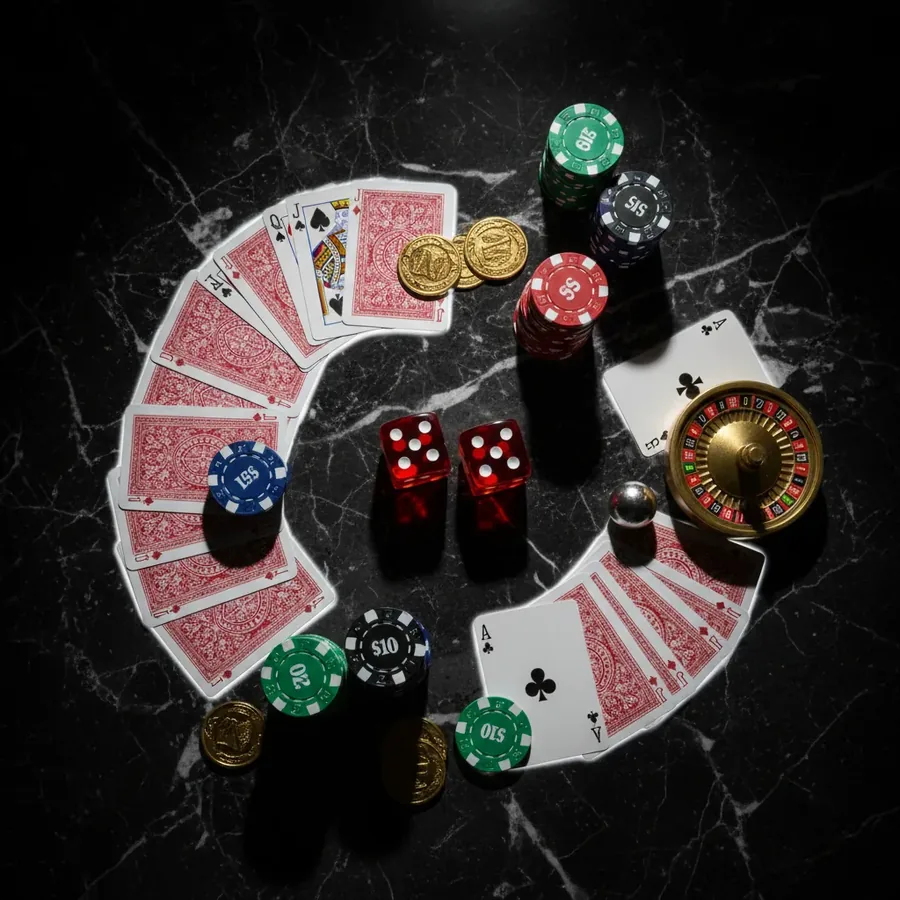
RNG vs Live Roulette: Four Clear Differences
Roulette European runs on a single-zero wheel with 37 pockets, an RTP of 97.30% and a house edge of 2.70%; the payouts are set as if there were 36 pockets, so the same edge sits on every bet, from Straight 35:1 down to Red/Black 1:1. American Roulette uses 38 pockets with 1–36 plus 0 and 00, and the same payouts, which doubles the house edge to 5.26% and cuts the RTP to 94.74%. The first clear difference is the pocket count, and it costs the player 2.56 percentage points.
The second difference is the La Partage rule, which is available on French Roulette even-money bets and returns half the stake when 0 hits, lifting the RTP to 98.65% and lowering the house edge to 1.35%. En Prison gives the same 1.35%. The rule applies only to Red/Black, Odd/Even and Low/High; inside bets keep the European 2.70% edge. A player staking 100 € on Red at French Roulette therefore faces an average cost of 1.35 €, while the same bet on American Roulette costs 5.26 €.
The third difference is the payout structure on side bets: Baccarat Player Pair and Banker Pair, an 8-deck side bet, carries an RTP of 89.64% and a house edge of 10.36%, with a pair paid at 11 for 1, i.e. 10:1 on the bet. The fourth difference is the number of repetitions per hour at a live table compared with an RNG wheel, which changes how quickly those percentages bite. In money, 100 € of stakes at 2.70% costs 2.70 € on the European wheel and 5.26 € on the American wheel.
Straight-Up 35:1 Against 1-in-37 Odds
A straight bet on Roulette European pays 35:1, while the single-zero wheel has 37 pockets, so the true chance of any one number is 1 in 37. The payouts are set as if there were 36 pockets, which is exactly where the 2.70% house edge and the 97.30% RTP come from. On a 10 € straight bet, the win returns 350 € plus the 10 € stake, but the average cost across all outcomes is 0.27 € per 10 € staked.
French Roulette with La Partage leaves the straight bet at 35:1 and the edge at 2.70%, because the half-stake return applies only to Red/Black, Odd/Even and Low/High. Even-money bets on the French wheel carry an RTP of 98.65% and a house edge of 1.35%, which is 1.35 percentage points better than the straight. The straight is the highest payout on the layout, but it sits on the same 2.70% edge as Split 17:1, Street 11:1, Corner 8:1 and Six Line 5:1.
American Roulette pays a straight at 35:1 as well, but the 38 pockets lift the house edge to 5.26% and push the RTP down to 94.74%. A 100 € straight bet on the double-zero wheel therefore costs 5.26 € on average, almost twice the 2.70 € on the European wheel. The 1 in 37 chance pays the same 35:1 on both wheels, which is why the extra pocket, not the payout, decides the value.
American Roulette: 5.26% Because of the Double Zero
American roulette runs on a 38-pocket wheel, the numbers 1 to 36 plus 0 and 00, and returns 94.74% to players over the long run. The house edge is 5.26%, meaning €100 of stakes costs €5.26 on average across all bets. That gap comes from the two extra pockets: payouts are set as if 36 pockets existed, so the wheel keeps more than the 2.70% of European roulette.
Inside bets carry the same pricing: a straight pays 35:1, a split 17:1, a street 11:1, a corner 8:1 and a six line 5:1, while outside bets pay 2:1 on dozens and columns and 1:1 on red or black. Every one of these wagers shares the identical 5.26% edge, because the payout ratio never changes with the extra pocket.
Against European roulette at 97.30% RTP, the double-zero wheel gives up 2.56 percentage points of return. On €1,000 of total stakes, that difference is €25.60 more kept by the house, or €52.60 instead of €27.00. Reducing exposure means smaller stakes or shorter sessions; the edge itself cannot be bet around on this wheel.
When to Surrender 16 Against a 10
Blackjack Liberal Vegas Strip carries an RTP of 99.72% and a house edge of 0.28%, and its rule set includes late surrender alongside S17, DAS and resplit. Late surrender lets the player give up the hand after the dealer has checked for blackjack and lose half the stake, returning 50%. That single rule improves the RTP by about 0.08 percentage points, which on a 100 € main bet is 0.08 € of expected value per hand.
The alternative is Blackjack Insurance, a separate side bet of up to 50% of the main bet when the dealer shows an ace, with an RTP of 92.53% and a house edge of 7.47%; basic strategy always declines it, except for card counters at a true count of at least +3. With a single deck the insurance edge is roughly 5.88%. Between a 7.47% side bet and a 50% stake return on surrender, the surrender is the cheaper exit from a 16 against a dealer 10.
For comparison, Blackjack Single deck with classic rules and a 3:2 payout reaches an RTP of 99.85% and a house edge of 0.15%; one deck is about 0.48 percentage points cheaper than eight decks. Blackjack Liberal Vegas Strip pays 3:2 on a blackjack and 1:1 on a win, and its standard deviation is 1.15. Late surrender is worth about 0.08 percentage points; early surrender is worth up to 0.6 percentage points but is rare.
Game categories at a glance
| Category | Examples | Stakes From | Highlight |
|---|---|---|---|
| Slots | Immortal Romance, Chaos Crew, Money Train 3 | 0.10 EUR | thousands of titles |
| Table games | Roulette, Blackjack, Baccarat | 0.50 EUR | classic rules |
| Live casino | Mega Fire Blaze Roulette Live, Quantum Roulette Live | 0.20 EUR | real dealers |
| Jackpot games | Mega Moolah, Divine Fortune, Age of the Gods | 0.20 EUR | progressive pools |
| Instant games | Aviator, Plinko, Mines | 0.10 EUR | fast rounds |
| Video poker | Jacks or Better, Deuces Wild | 0.25 EUR | strategy based |
6 Decks vs 8 Decks: The House Edge Difference
Blackjack Insurance with 6–8 decks has an RTP of 92.53%, which leaves a house edge of 7.47% on the side bet. The insurance bet pays 2:1 when the dealer has a ten in the hole, but with a single deck the edge falls to roughly 5.88%. Declining insurance is the basic-strategy play, so a player who takes it on a 6-deck shoe is giving the house 7.47% on up to 50% of the main bet.
Shoe size itself moves the main-game edge: Blackjack Single deck with classic rules and a 3:2 payout returns 99.85% and carries a 0.15% house edge. One deck is worth about −0.48 percentage points against 8 decks, so the same rules on a 6-deck shoe sit between the two extremes. That gap is the reason a 6:5 payout, which is common on single-deck tables, can wipe out the benefit.
Blackjack Liberal Vegas Strip, with S17, DAS, resplit and late surrender, shows how far the rule set can push the figure: 99.72% RTP and a 0.28% house edge. Adding late surrender to a game improves the return by about 0.08 percentage points. A player comparing a 6-deck and an 8-deck table therefore needs to check the payout ratio and the surrender rule before the deck count alone.
Dozen Bets at 2:1: Twelve Numbers, a Third of the Wheel
A dozen bet on the European wheel pays 2:1 and covers twelve of the 37 pockets, so it wins on roughly one spin in three. The European wheel returns 97.30% with a 2.70% house edge on all bets, including dozens and columns, because the payouts are set as if there were 36 pockets. On a €10 dozen bet, the average cost per spin is €0.27.
The American wheel doubles that edge. Roulette American has 38 pockets (1–36 plus 0 and 00) and an RTP of 94.74%, giving a house edge of 5.26% even though the dozen still pays 2:1. The extra pocket is the whole difference: 5.26% against 2.70% is nearly double the cost for the same 2:1 payout.
French roulette with La Partage changes the picture only for even-money bets: Red/Black, Odd/Even and Low/High return half the stake on 0, lifting RTP to 98.65% and cutting the edge to 1.35%. Inside bets, including the dozen at 2:1, stay at the European level of 97.30%. A player who wants the La Partage benefit has to move the stake from the dozen to an even-money bet.
Video Poker 9/6: What the Two Numbers Mean
Video Poker Deuces Wild — Full Pay uses the pay table 25/15/9/5/3/2/2/1 and returns 100.76%, which is a house edge of −0.76% and positive expected value for the player with flawless optimal strategy at the maximum bet. Natural Royal pays 800, Four Deuces 200, Wild Royal 25, Five of a Kind 15, Straight Flush 9, Four of a Kind 5, Full House 3, Flush 2, Straight 2 and Three of a Kind 1.
The near-full-pay alternative, Video Poker Deuces Wild — Not So Ugly Ducks, returns 99.73% with a 0.27% house edge. Its pay table differs at Five of a Kind 16, Straight Flush 10 and Four of a Kind 4, while the top awards stay at Natural Royal 800, Four Deuces 200 and Wild Royal 25. Illinois Deuces is lower at 98.91%, so the same game name can carry three different returns.
Under Full Pay the smallest deviation from optimal strategy pushes RTP below 100%, which turns the −0.76% edge into a loss. That is why the two numbers in a 9/6-style label matter: they identify the pay table, and the pay table sets the return. A player who changes one hold decision on Full Pay gives up the entire positive edge.
Split, Double, and Surrender: Three Decisions Explained
In Blackjack Surrender with late surrender, the player gives up the hand after the dealer has checked for blackjack and loses half the stake, so 50% of the stake is returned. This rule improves the return to player by about 0.08 percentage points, calculated as a house edge reduction of 0.08 percentage points. On a €100 bet, surrendering returns €50 instead of risking the full amount.
Early surrender is worth much more than late surrender, up to 0.6 percentage points, but it is extremely rare in modern Blackjack variants. The late surrender option only becomes available after the dealer confirms no blackjack, which limits its protection. For a player facing a strong dealer card, the guaranteed half-stake return changes the cost of continuing the hand.
Blackjack Liberal Vegas Strip with liberal rules and a 3:2 payout carries an RTP of 99.72% and a house edge of 0.28%. Its rule set includes S17, DAS, resplit and late surrender, with a standard deviation of 1.15. A €100 stake costs €0.28 on average under this rule set, compared with higher edges on weaker rule sets.
How a Blackjack Hand Plays Out: Cards, Decisions, 3:2 Payout
Blackjack Liberal Vegas Strip pays 3:2 on a natural blackjack and 1:1 on a regular win, with an RTP of 99.72% and a house edge of 0.28%. A €100 bet that receives a natural blackjack returns €150, while a normal win returns €100. The 3:2 payout applies only to the first two cards totaling 21.
Blackjack single deck with classic rules and a 3:2 payout reaches an RTP of 99.85% and a house edge of 0.15%. Fewer decks lower the edge, with one deck giving about 0.48 percentage points compared with eight decks. That 0.48 percentage point gap is often offset by a 6:5 payout instead of 3:2.
Blackjack Insurance, a side bet of up to 50% of the main bet when the dealer shows an ace, carries an RTP of 92.53% and a house edge of 7.47%, paid at 2:1. Basic strategy always declines insurance except for card counters at a true count of +3 or higher. With a single deck, the insurance edge is approximately 5.88%, still far above the main game.
Before Doubling Down: Read the Dealer's Upcard
Blackjack Liberal Vegas Strip allows doubling after splitting under its DAS rule, part of a rule set with an RTP of 99.72% and a house edge of 0.28%. The dealer stands on all 17s under S17, and resplitting is permitted. These rule interactions shape when doubling down adds value, since the player commits an extra stake against a known dealer card.
Blackjack single deck with classic rules and a 3:2 payout shows an RTP of 99.85% and a house edge of 0.15%. One deck lowers the edge by about 0.48 percentage points compared with eight decks. A smaller deck count changes the composition of remaining cards, which affects the decision to double against an open dealer card.
Blackjack Surrender with late surrender modifies the house edge by 0.08 percentage points in the player's favor, with 50% of the stake returned after the dealer checks for blackjack. Standard deviation on Blackjack Liberal Vegas Strip is 1.15. Reading the open dealer card before doubling means weighing the extra stake against the dealer's visible strength.
35:1 Instead of 36:1: Where the House Edge Comes From
Roulette European uses a single-zero wheel with 37 pockets, numbered 1 to 36 plus 0, and pays a straight bet at 35:1. Because payouts are set as if there were 36 pockets, the house edge is 2.70% on all bets and the RTP is 97.30%. A €100 straight bet returns €3,500 on a win but costs €2.70 per €100 staked on average.
Roulette American uses a double-zero wheel with 38 pockets, numbered 1 to 36 plus 0 and 00, with the same 35:1 straight payout. The extra pocket doubles the house edge to 5.26% and lowers the RTP to 94.74%. A €100 stake on the American wheel costs €5.26 on average, nearly twice the European figure.
Roulette French with La Partage on even-money bets returns half the stake when 0 hits, giving an RTP of 98.65% and a house edge of 1.35%. The rule applies only to Red/Black, Odd/Even and Low/High, not to inside bets. Inside bets on the French wheel keep the 2.70% edge, so a €100 straight bet still costs €2.70 on average.
Straight-Up Pays 35:1, Split Pays 17:1
Roulette European pays a straight bet at 35:1, a split at 17:1, a street at 11:1, a corner at 8:1 and a six line at 5:1, with an RTP of 97.30% and a house edge of 2.70%. A €10 split returns €170 on a win under these odds. The 37-pocket wheel keeps the same 2.70% edge across every inside bet.
Roulette French with La Partage applies its 1.35% house edge only to even-money bets, while inside bets keep the European-level 2.70% edge. A €10 straight bet costs €0.27 on average, whereas a €10 Red/Black bet costs €0.135 on average under La Partage. The rule returns half the stake when 0 hits on even-money bets only.
Roulette American, with 38 pockets, uses the same payout schedule as the European wheel: straight 35:1, split 17:1, street 11:1, corner 8:1, six line 5:1. Its RTP is 94.74% and its house edge is 5.26%. A €10 split on the American wheel costs €0.526 on average, compared with €0.27 on the European wheel.
Contact
Live - online chat
Banking









Providers












Coolcat Casino 2026